
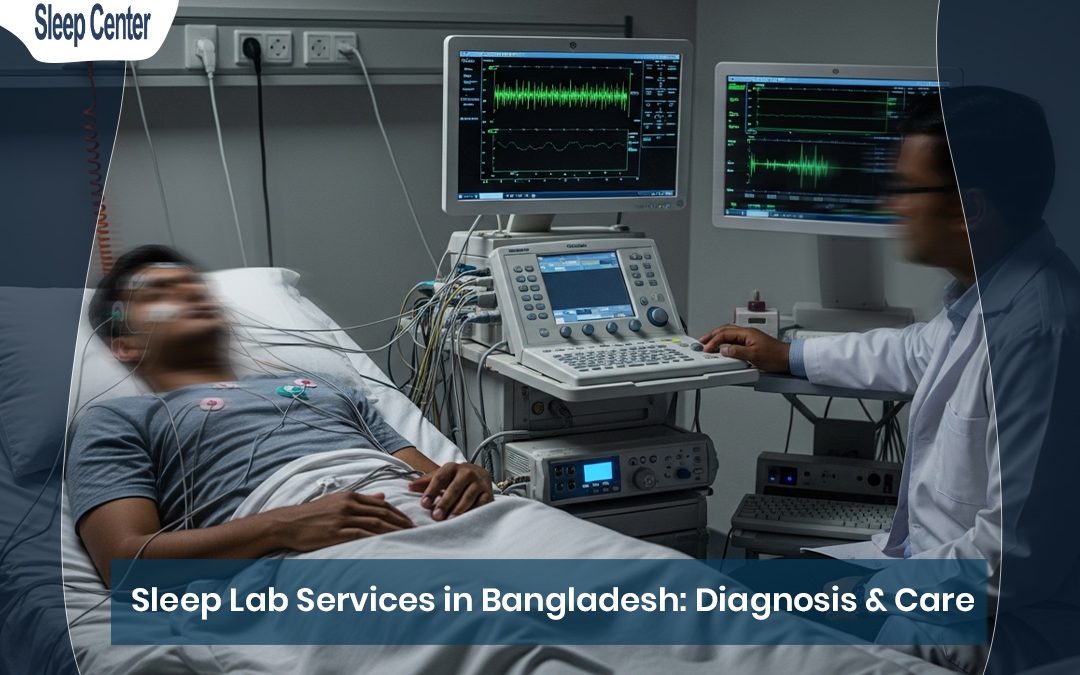
Sleep lab services in Bangladesh provide specialized diagnostic testing to evaluate and treat sleep disorders, helping thousands reclaim restorative sleep. In urban centers like Dhaka, accredited sleep labs use advanced technology to monitor sleep patterns overnight. Facilities such as Sleep Center BD, DSRC (Dhaka Sleep Respiratory Centre—pioneering since 2005), Square Hospital’s Respiratory and Sleep Medicine Centre, Evercare Hospital, United Hospital, Labaid Diagnostics, and others offer polysomnography (PSG) and related tests. These services are increasingly accessible, with growing awareness of how poor sleep contributes to health issues like hypertension, diabetes, and fatigue in Bangladesh’s demanding lifestyle.
What Are Sleep Lab Services?
Sleep lab services involve overnight or home-based studies that record physiological data during sleep. A sleep lab (or sleep center) is a controlled environment—often in hospitals or dedicated clinics—equipped with monitoring devices to track brain waves, breathing, oxygen levels, heart rate, muscle activity, and eye movements. These non-invasive tests, primarily polysomnography (PSG), provide detailed insights into sleep quality and disruptions. In Bangladesh, sleep labs help diagnose common issues amid high urban stress, noise, and lifestyle factors.
Why You Might Need a Sleep Study
A sleep study is recommended if you experience:
- Loud snoring with gasping or choking.
- Excessive daytime sleepiness or fatigue.
- Frequent awakenings, morning headaches, or dry mouth.
- Difficulty concentrating, irritability, or mood changes.
- Suspected conditions like sleep apnea, insomnia, or restless legs. Untreated sleep disorders raise risks for heart disease, stroke, and accidents—prevalent concerns in Bangladesh.
Common Sleep Disorders Diagnosed in Sleep Labs
Sleep labs in Bangladesh commonly identify:
- Obstructive Sleep Apnea (OSA) — The most frequent, involving repeated airway blockages and breathing pauses.
- Central Sleep Apnea — Brain-related breathing interruptions.
- Insomnia — Trouble falling or staying asleep.
- Narcolepsy — Sudden daytime sleep attacks.
- Restless Legs Syndrome (RLS) or Periodic Limb Movement Disorder.
- Parasomnias (e.g., sleepwalking) or other disruptions. High rates of sleep problems exist in urban populations, healthcare workers, and students, often linked to stress and poor habits.
How Sleep Studies Work (Step-by-Step Process)
- Consultation — A sleep specialist reviews symptoms and medical history.
- Preparation — Avoid caffeine/alcohol, naps; follow instructions (e.g., no heavy meals).
- Arrival — Evening check-in at the lab (private room resembling a bedroom).
- Setup — Technicians attach sensors: EEG for brain waves, belts for breathing, oximeter for oxygen, electrodes for heart/muscles.
- Overnight Monitoring — Sleep as normally as possible; data recorded continuously.
- Morning — Sensors removed; brief questionnaire.
- Follow-up — Results analyzed in 1-2 weeks.
Home sleep apnea tests (HSAT) offer a simpler alternative for suspected OSA.
Types of Sleep Tests Available in Bangladesh
- Polysomnography (PSG) — Comprehensive in-lab overnight study (gold standard).
- Split-Night PSG — Diagnostic + CPAP titration in one night.
- CPAP/BiPAP Titration — Adjusts pressure for therapy.
- Home Sleep Apnea Test (HSAT) — Portable device for home use (convenient, less detailed).
- Multiple Sleep Latency Test (MSLT) — Daytime naps to assess narcolepsy. Major centers like Sleep Center BD, Square Hospital (with Alice 6 system), and DSRC provide these.
What to Expect During a Sleep Lab Test
Expect a comfortable, hotel-like room with dim lighting, TV, and privacy. Sensors may feel unusual at first but are painless. Technicians monitor remotely; you can move or call for help. Most fall asleep despite setup. In Dhaka labs, facilities combat noise/heat for better rest.
How Doctors Analyze Sleep Study Results
Specialists review raw data for:
- Sleep stages and efficiency.
- Apnea-hypopnea index (AHI) for OSA severity.
- Oxygen desaturations, arousals, limb movements.
- Abnormal patterns (e.g., REM sleep issues). Results guide diagnosis and personalized plans.
Treatment Options After Diagnosis
- CPAP/BiPAP Therapy — Masks deliver air pressure (widely available).
- Oral Appliances — For mild OSA.
- Lifestyle Changes — Weight loss, positional therapy.
- Surgery — For anatomical issues (e.g., tonsillectomy).
- CBT-I — For insomnia.
- Medications — Targeted use (e.g., for RLS or narcolepsy).
Benefits of Choosing a Professional Sleep Lab
- Accurate, comprehensive diagnosis vs. self-assessment.
- Expert interpretation by pulmonologists/neurologists.
- Access to advanced equipment and follow-up care.
- Reduced long-term health risks.
- Improved quality of life, energy, and safety.
When to Visit a Sleep Specialist in Bangladesh
Seek care if symptoms persist 2+ weeks, affect daily life, or include breathing pauses/snoring/gasping. Early evaluation prevents complications.
In Dhaka, consult at Sleep Center BD (Gulshan), DSRC, Square Hospital, Evercare, United Hospital, Labaid, or ENT Care Center. Costs range BDT 8,000–40,000 (home vs. in-lab PSG). Many offer consultations first.
Professional sleep lab services in Bangladesh offer hope for better rest—don’t let sleep issues disrupt your health. Contact a specialist today for evaluation and tailored care.