
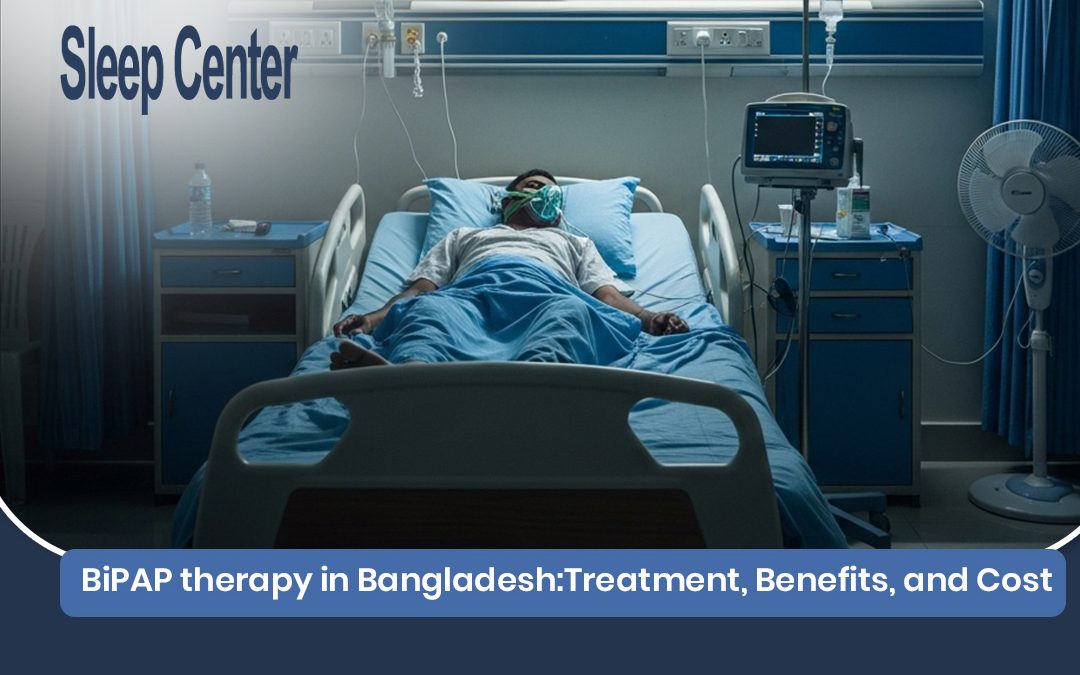
In Bangladesh, where urban pollution, high stress levels, and rising incidences of respiratory conditions like sleep apnea and COPD are increasingly common, BiPAP therapy has emerged as a vital non-invasive treatment option. Bilevel Positive Airway Pressure (BiPAP) machines deliver dual levels of air pressure to support breathing, offering relief for those struggling with disrupted sleep or chronic breathing difficulties. At the Sleep Center in Dhaka, under the guidance of Dr. M. Muinul Hafiz, a specialist in ENT and sleep disorders with over 26 years of experience, BiPAP therapy is tailored to individual needs, helping patients reclaim restful nights and healthier days. This comprehensive guide explores BiPAP therapy, its applications in Bangladesh, and practical considerations for those seeking effective treatment.
What is BiPAP Therapy?
BiPAP therapy is a form of non-invasive ventilation that uses a machine to deliver pressurized air through a mask, assisting with breathing during sleep or rest. Unlike traditional oxygen therapy, BiPAP actively supports inhalation and exhalation by providing two distinct pressure levels: a higher pressure for inhaling (IPAP) and a lower pressure for exhaling (EPAP). This mimics natural breathing patterns, making it easier for the lungs to expand and contract without excessive effort.
The therapy is delivered via a compact, tabletop device connected to a flexible hose and a comfortable mask (full-face, nasal, or nasal pillows). BiPAP machines often include features like heated humidifiers to prevent dry airways and auto-adjusting algorithms for personalized comfort. In Bangladesh, where sleep disorders affect millions due to factors like urbanization and lifestyle changes, BiPAP has become accessible through specialized centers like ours, offering home-based solutions for long-term management.
How BiPAP Differs from CPAP Therapy
While both BiPAP and Continuous Positive Airway Pressure (CPAP) are positive airway pressure therapies used to treat sleep apnea, their mechanisms differ significantly, impacting comfort and suitability.
- Pressure Delivery: CPAP maintains a single, constant pressure level throughout the breathing cycle (typically 4-20 cm H₂O), which keeps airways open but can feel challenging to exhale against, especially at higher settings. BiPAP, in contrast, uses two levels—higher for inhalation (up to 30 cm H₂O) and lower for exhalation—reducing the effort needed to breathe out and enhancing comfort for users with respiratory challenges.
- Comfort and Compliance: Many patients in Bangladesh find CPAP tolerable for mild obstructive sleep apnea (OSA), but those with severe OSA, central sleep apnea (CSA), or conditions like COPD often switch to BiPAP for its breath-by-breath relief. Studies show BiPAP improves adherence rates by up to 20-30% in non-compliant CPAP users.
- Modes and Versatility: CPAP is simpler and more affordable for basic needs, while BiPAP offers modes like S (spontaneous), T (timed), and S/T (spontaneous/timed) for advanced support, such as ensuring a minimum breath rate. This makes BiPAP ideal for complex cases, though it’s generally pricier.
At the Sleep Center, we recommend a sleep study (polysomnography) to determine the best fit—CPAP for straightforward OSA or BiPAP for multifaceted breathing issues.
Common Conditions Treated with BiPAP in Bangladesh
BiPAP therapy addresses a range of respiratory challenges prevalent in Bangladesh, where air quality and smoking contribute to higher rates of lung conditions. Key applications include:
- Obstructive Sleep Apnea (OSA): The most common indication, affecting over 10% of adults in urban areas like Dhaka. BiPAP prevents airway collapse during sleep, reducing snoring and daytime fatigue.
- Central Sleep Apnea (CSA): Caused by brain signaling issues, BiPAP stabilizes irregular breathing patterns, beneficial for those with heart failure or neurological disorders.
- Chronic Obstructive Pulmonary Disease (COPD): In Bangladesh, COPD impacts millions due to biomass fuel exposure; BiPAP eases exhalation, reducing breathlessness and hospitalization risks by up to 40%.
- Obesity Hypoventilation Syndrome: Common in rapidly urbanizing populations, BiPAP improves oxygen levels and CO₂ expulsion.
- Acute Respiratory Failure and Neuromuscular Disorders: Used in hospitals or homes for conditions like pneumonia or ALS, providing ventilatory support without intubation.
Early intervention at centers like ours can prevent complications such as hypertension or cardiovascular events, which are on the rise in Bangladesh.
How BiPAP Therapy Works
A BiPAP machine operates through a simple yet sophisticated process:
- Air Pressurization: The device draws in room air, filters it, and pressurizes it using a built-in blower.
- Dual Pressure Delivery: Sensors detect your breathing; IPAP (higher pressure) aids inhalation to open airways, while EPAP (lower pressure) maintains openness during exhalation. The difference (typically 4-10 cm H₂O) reduces work of breathing.
- Mask Interface: Air flows via a mask sealed to the face, with features like ramp-up (gradual pressure increase) for easier sleep onset.
- Monitoring and Adjustments: Modern machines track usage data via SD cards or apps, allowing clinicians to fine-tune settings. In Bangladesh, models with auto-titration adapt in real-time to pollution-induced variations in breathing.
Treatment begins with a titration study at the Sleep Center, ensuring optimal settings (e.g., IPAP 10-20 cm H₂O, EPAP 5-15 cm H₂O) for efficacy.
Key Benefits of BiPAP Therapy
BiPAP offers transformative advantages, particularly for Bangladeshi patients facing environmental and lifestyle stressors:
- Improved Comfort and Adherence: Dual pressures make therapy feel natural, boosting compliance by 50% over CPAP in COPD cases.
- Enhanced Breathing Efficiency: Increases oxygen saturation and reduces CO₂ buildup, lowering risks of heart strain and fatigue.
- Reduced Hospitalizations: Studies indicate up to 30% fewer ER visits for respiratory exacerbations.
- Better Sleep Quality: Minimizes disruptions, leading to higher energy levels and cognitive function—crucial in a fast-paced economy.
- Non-Invasive and Portable: Home-use models support independence, with battery options for power outages common in rural areas.
Patients often report waking refreshed, with fewer headaches and improved mood after consistent use.
Cost of BiPAP Therapy in Bangladesh
Affordability is key in Bangladesh, where healthcare access varies. BiPAP costs include the machine, mask, and ongoing supplies:
Component | Price Range (BDT) | Notes |
Basic BiPAP Machine | 40,000 – 70,000 | Entry-level models (e.g., BMC or local brands) |
Auto-Adjusting BiPAP | 65,000 – 150,000 | Popular options like Philips Respironics |
Advanced Models (e.g., with AVAPS) | 190,000 – 230,000 | For complex needs, including humidifiers |
Masks & Tubing | 5,000 – 15,000 | Initial setup; replace every 3-6 months |
Filters & Maintenance | 1,000 – 3,000/month | Ongoing costs |
Prices fluctuate with imports and features; entry-level units start at 50,000 BDT, while premium ResMed models exceed 200,000 BDT. Insurance coverage is limited, but subsidies via NGOs or government programs are emerging. At the Sleep Center, we offer financing and rentals (from 5,000 BDT/month) to make therapy accessible.
How to Choose the Right BiPAP Machine
Selecting a BiPAP involves balancing needs, budget, and features:
- Assess Your Condition: Mild OSA? Opt for basic fixed BiPAP. COPD or CSA? Choose auto-adjusting with backup rates.
- Key Features: Look for heated humidifiers (essential in humid Dhaka), quiet operation (<30 dB), data tracking, and EPR (expiratory relief).
- Portability: Compact models (e.g., Philips DreamStation) suit travel; ensure universal voltage for rural use.
- Brand Reliability: Trusted names like ResMed, Philips, and BMC offer 2-year warranties and local service.
Consult a specialist—our team at the Sleep Center evaluates via sleep studies to recommend models like the ResFree F25V (affordable at ~70,000 BDT) or Philips DreamStation (~210,000 BDT) for advanced care.
Patient Experience and Success Stories
BiPAP transforms lives, as shared by our patients:
- Rahim, 55, Dhaka (COPD): “Before BiPAP, nights were battles with breathlessness. Now, I sleep 7 hours uninterrupted, and my energy for work has returned. It’s like breathing freely again.”
- Fatema, 42, Chittagong (Severe OSA): Switched from CPAP due to discomfort; “The dual pressure feels natural. My AHI dropped from 45 to 3, and family relationships improved—no more snoring complaints!”
- Dr. Karim, 60, Sylhet (Heart Failure with CSA): “Post-therapy, my oxygen levels stabilized, reducing hospital visits. BiPAP gave me back my independence.”
These stories highlight 80-90% success rates in compliance and symptom relief at our center.
Maintenance and Safety Tips for BiPAP Users
Proper care ensures longevity and hygiene:
- Daily: Rinse mask and humidifier with mild soap; air-dry. Wipe machine exterior.
- Weekly: Clean tubing with vinegar-water solution; replace water daily.
- Monthly: Wash filters (reusable) or replace disposables. Check seals for leaks.
- Safety: Use distilled water; avoid direct sunlight. Monitor for skin irritation—switch masks if needed.
Regular check-ups at the Sleep Center prevent issues, with data reviews optimizing settings.
Future of BiPAP Therapy in Bangladesh
As awareness grows, BiPAP’s future in Bangladesh is promising. With rising sleep disorder diagnoses (projected 20% increase by 2030 due to urbanization), integration of AI-driven auto-titration and telehealth will enhance access. Local manufacturing could lower costs by 30%, while government initiatives like the National Health Policy may subsidize devices. At the Sleep Center, we’re pioneering hybrid models combining BiPAP with lifestyle coaching, ensuring sustainable, equitable care for all.
Ready to breathe easier? Contact the Sleep Center at 01955-533859 or sleepcenterbd@gmail.com for a consultation. Your path to better sleep starts today.