
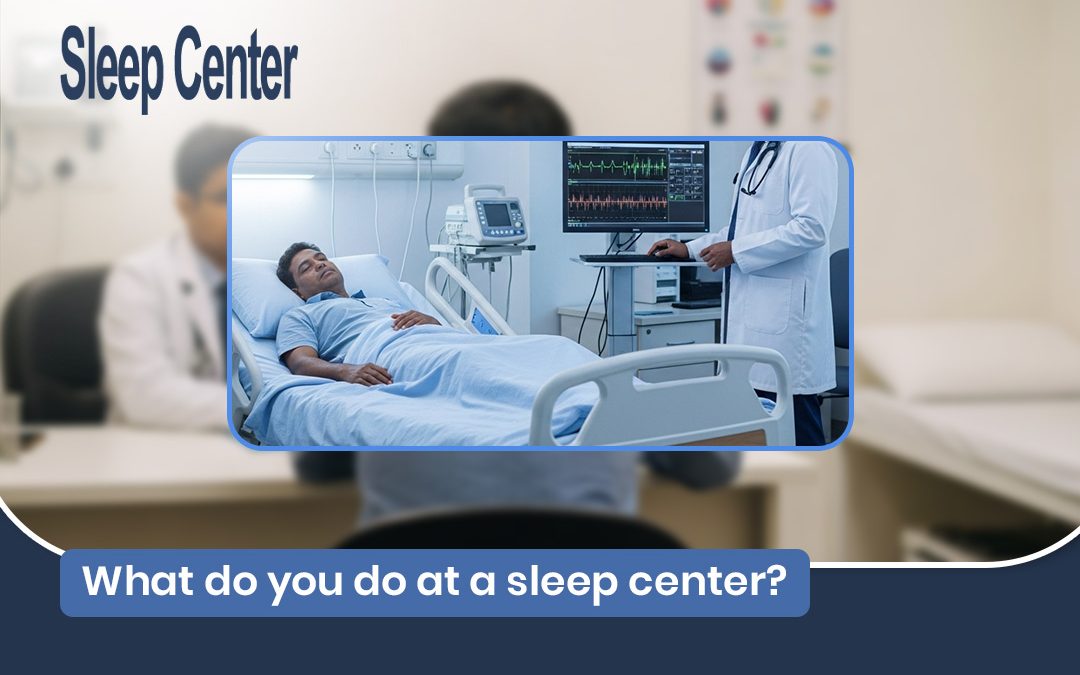
If your doctor or family has ever suggested “you should get a sleep test,” you probably wondered: what actually happens there? At Sleep Center Bangladesh (Gulshan-2, Dhaka), we perform hundreds of sleep studies every month. Here’s exactly what you (and we) do when you come to a sleep center — from the moment you walk in until you get your results.
What Will They Do at a Sleep Clinic?
Everything revolves around one goal: record your natural sleep in detail so we can see what’s disrupting it. Activities include:
- Detailed consultation with a sleep specialist
- Overnight in-lab polysomnography (full sleep study)
- Home sleep apnea testing (for suitable patients)
- CPAP/BiPAP titration studies
- Multiple Sleep Latency Test (MSLT) for narcolepsy
- Follow-up result discussion and treatment planning
What to Expect at a Sleep Clinic
Your private sleep room looks like a comfortable hotel room (bed, TV, air-conditioning, attached bathroom). You arrive in the evening (usually 8:30–9:30 PM), get hooked up to sensors by a trained technologist, sleep as normally as possible, and leave the next morning around 6:00–6:30 AM after a light breakfast.
How to Prepare Before a Sleep Study
Simple instructions to get the most accurate results:
- Avoid caffeine and alcohol after 12 noon on the test day
- No naps longer than 30 minutes that day
- Wash hair (no oil, gel, or spray) so sensors stick properly
- Bring comfortable two-piece pajamas (no onesies) and regular medications
- Have dinner before coming; light snacks are available
- Continue your normal routine — the goal is to capture your real sleep
Sensors and Data Collected During the Test
A certified sleep technologist gently applies about 20–25 small sensors:
- EEG (scalp) → brain waves and sleep stages
- EOG (near eyes) → eye movements (detects REM sleep)
- EMG (chin & legs) → muscle tone and leg movements
- ECG (chest) → heart rate and rhythm
- Nasal cannula & thermistor → airflow
- Chest and abdomen belts → breathing effort
- Pulse oximeter (finger) → blood oxygen levels
- Microphone → snoring intensity
- Infrared video → body position and movements
All wires are bundled into a single ponytail so you can turn freely.
Types of Sleep Studies Performed
- Diagnostic Overnight Polysomnography (PSG) – full picture of your sleep
- Split-Night Study – first half diagnoses apnea, second half tries CPAP
- CPAP/BiPAP Titration – finds your perfect pressure setting
- Home Sleep Apnea Test (HSAT) – portable device for uncomplicated cases
- Multiple Sleep Latency Test (MSLT) – daytime nap study for narcolepsy
- Maintenance of Wakefulness Test (MWT) – measures ability to stay awake (for pilots, drivers)
Why Doctors Recommend a Sleep Study
Because many serious conditions can only be confirmed while you sleep:
- Witnessed breathing pauses or loud snoring → suspect obstructive sleep apnea
- Falling asleep at the wheel or during meetings → possible narcolepsy or severe apnea
- Waking up gasping or with headaches → low oxygen at night
- Legs kicking all night → periodic limb movement disorder
- Chronic insomnia not responding to pills → need objective data
What Happens During the Night? (What Do People Do During Sleep?)
You do exactly what you do at home: fall asleep, change positions, maybe snore, dream, and wake up briefly (most people don’t remember these brief awakenings). The technologist monitors everything from a separate room and only enters if a sensor comes loose or you need help.
What If I Have to Pee During a Sleep Study?
Completely normal and no problem at all!
- Just sit up and say “I need the bathroom.”
- The technologist comes within 30–60 seconds, unplugs the wire box (you stay fully connected), walks you to the attached private bathroom, and plugs you back in when you return.
- Most patients need the bathroom 1–2 times — it doesn’t affect the study validity.
Common Concerns and Comfort Tips
- “I’m scared I won’t sleep” → 95% of patients sleep enough for a valid study. Even 4–5 hours gives excellent data.
- “The sensors hurt” → they use medical tape and paste; no needles or pain.
- “It feels weird being watched” → only the technologist on duty sees the video, for medical purposes only.
- Bring your own pillow if it helps you relax.
What Happens After the Sleep Study (Results & Diagnosis)
- The technologist removes all sensors in the morning (takes 5–10 minutes).
- You go home, shower, and continue your day normally.
- Raw data (often 800–1,200 pages) is scored by registered sleep technicians.
- Dr. M. Muinul Hafiz personally reviews every study.
- You return (usually within 7–10 days) for a 30–45 minute result consultation with graphs, severity grading (mild/moderate/severe), and your personalized treatment plan.
Ready for better sleep? Book your sleep study today at Sleep Center Bangladesh — the only dedicated, internationally-standard sleep lab in the country.
📍 United Hospital Annex Building (Plot 28, Gulshan-2, Dhaka)
📞 Call/WhatsApp: +88 01955 533 859
✉️ sleepcenterbd@gmail.com
Don’t spend another year feeling exhausted. One night with us can change the rest of your life.